Enjoy FREE shipping on your first order! (Minimum $99 purchase)
Alert: Important Update for US patients - Upcoming U.S. Government changes. Click to read more

Enjoy FREE shipping on your first order! (Minimum $99 purchase)
Alert: Important Update for US patients - Upcoming U.S. Government changes. Click to read more
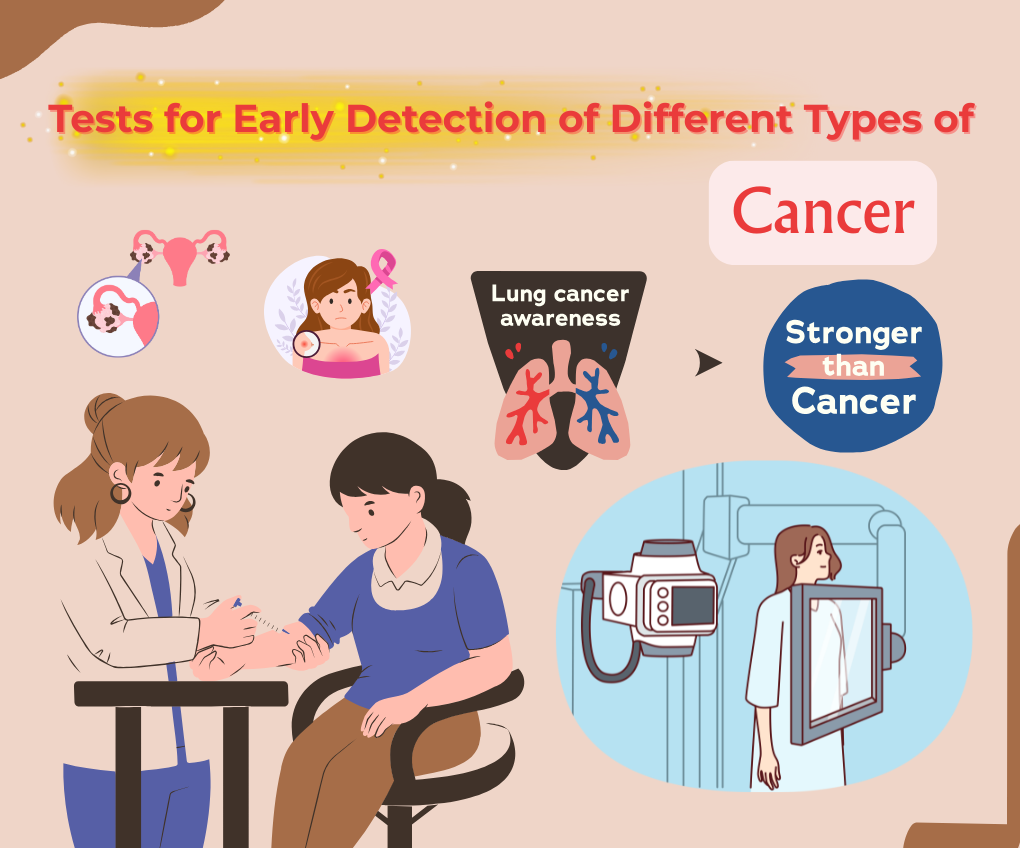
Cancer is one of the leading causes of death worldwide, but here’s an important fact many people don’t realize: when detected early, many types of cancer can be treated more effectively, often with better survival rates and less aggressive treatments. Early cancer detection tests save lives.
Over the years, medical science has developed different screening tests that help identify cancer in its earliest stages—sometimes even before symptoms appear. These tests are not about diagnosing cancer directly but about spotting warning signs that suggest further investigation is needed.
In this blog, we’ll explore why early detection is so crucial, which tests are commonly used, and what you should know about specific cancers and their screening methods. We’ll also break down how screening procedures work, how results are interpreted, Blood tests for cancer, and when you should talk to your doctor about getting screened.
Catching cancer early makes all the difference. Imagine two patients: one whose cancer is discovered at Stage I, when the tumor is still small and localized, and another whose cancer is diagnosed at Stage IV, when it has already spread to distant organs. The first patient may need only surgery or mild therapy, while the second may require intensive chemotherapy, radiation, and still face lower survival odds.
Many cancers detected early have survival rates of 80–90% or more. For example, localized breast cancer has a five-year survival rate of nearly 99%, but this drops significantly if the cancer spreads.
Smaller tumors can often be removed surgically without the need for harsh chemotherapy or radiation. This improves the quality of life during and after treatment.
Early treatment usually means fewer side effects, shorter hospital stays, and quicker recovery.
Advanced cancer treatment is often far more expensive. Early detection can reduce the financial burden for both patients and healthcare systems.
Some screening tests are well established and recommended for the general population, especially for people above a certain age or with specific risk factors. Let’s look at the most common ones.
Mammograms are X-ray images of the breast. They can detect tumors that are too small to be felt during a physical exam. Women aged 40 and above are often advised to get regular mammograms, though guidelines vary by country and individual risk.
A Pap smear involves collecting cells from the cervix to look for precancerous or cancerous changes. The HPV test checks for high-risk strains of the human papillomavirus, which can cause cervical cancer. These tests are usually recommended for women aged 21–65.
In this procedure, a doctor uses a flexible tube with a camera to examine the colon and rectum. Polyps (small growths) can be detected and removed before they turn into cancer. Adults over 45 are often advised to start screening.
This is recommended mainly for heavy smokers or people with a history of smoking. It can detect lung tumors at an earlier stage compared to standard chest X-rays.
A blood test that measures PSA levels. High PSA may suggest prostate cancer, but it can also be elevated due to other conditions like infections or enlargement of the prostate.
Dermatologists often perform full-body skin exams to look for unusual moles or spots. Self-examinations are also encouraged for detecting melanoma early.
These tests are just the foundation. Beyond them, there are other specialized screenings for cancers that are rarer but equally important.
While some cancers have established screening methods, others are trickier to detect early. Let’s look at a few.
The tests for Ovarian cancer are often called a “silent killer” because symptoms are vague—bloating, pelvic pain, or changes in appetite—and usually appear only in later stages.
These tests are not perfect for general screening but may be recommended for women with a strong family history or genetic risk factors (like BRCA mutations).
Pancreatic cancer is one of the hardest to detect early because the pancreas is deep inside the body. By the time symptoms like jaundice or weight loss appear, the disease is often advanced.
This cancer is more common in younger men (ages 15–35). Thankfully, it has a very high cure rate when caught early.
Many people are anxious about medical tests, but knowing what to expect can ease that fear. This is how cancer tests work:
These include blood tests (like PSA, CA-125, AFP), imaging scans (like CT or MRI), and Pap smears. Preparation is usually minimal—fasting may be required before some blood tests.
Colonoscopy, endoscopy, and transvaginal ultrasound may sound intimidating, but they are generally safe and performed with sedation or local anesthesia.
Mammograms, CT scans, and MRIs are painless, though they may require you to stay still for a while.
Knowing the process helps patients feel empowered and prepared rather than fearful. It shows the importance of Cancer Screening.
Screening tests are not perfect. A result can be:
Doctors often recommend follow-up tests (like biopsies) if screening results are suspicious. It’s also important to understand that a positive screening test doesn’t always mean cancer—it’s simply a red flag to investigate further.
Not everyone needs every test. Cancer Screening guidelines depend on factors like:
Your doctor can help personalize a screening plan based on your unique risk factors.
Cancer is a frightening word, but early cancer detection tests put power back into our hands. With the right screening tests, many cancers can be caught before they become life-threatening. From routine mammograms and Pap smears to more specialized scans for ovarian or pancreatic cancer, these tests are tools of hope and prevention.
The most important step is awareness. Know your risks, talk to your doctor, and don’t delay screenings. In many cases, a simple test can save a life—possibly yours or that of someone you love. Trusted resources like Canada Pharmacy Pro also provide valuable guidance and support to help you stay informed about cancer prevention, prescription medications, and overall health.
Cancer screening means checking for cancer before symptoms appear. It’s important because early detection often leads to easier treatment and better survival rates.
Doctors may use a transvaginal ultrasound and a CA-125 blood test. These are mainly advised for women with higher genetic or family risk.
Pancreatic cancer is tricky to spot early, but endoscopic ultrasound, MRI/CT scans, and CA 19-9 blood tests can help in high-risk patients.
Regular self-exams are the best first step. If a lump is found, an ultrasound can confirm whether it’s cancerous.
Most screening tests are simple, safe, and cause little or no pain. Some may feel slightly uncomfortable, but they are generally very low risk.
It depends on your age, family history, and risk factors. Your doctor can recommend the right schedule for you.
> Allergy Medications: Types, Uses, Costs & Side Effects
> Xeljanz Cost & Savings Guide: How to Buy Safely Online
> 5 Ways to Lower Your Prescription Drug Prices This Month