Enjoy FREE shipping on your first order! (Minimum $99 purchase)
Alert: Important Update for US patients - Upcoming U.S. Government changes. Click to read more

Enjoy FREE shipping on your first order! (Minimum $99 purchase)
Alert: Important Update for US patients - Upcoming U.S. Government changes. Click to read more
Nature offers some of the most effective solutions for our well-being. One such nature-gifted, time-tested solution for our wide range of health issues is the butterfly pea flower tea.
Why are people recently preferring to drink blue tea in most parts of the world, and why should you consume it too? Well, the answer to this is here in this blog. Read on to learn about blue tea benefits, drawbacks, and preparation.
Blue tea, referred to by some as "butterfly pea tea" or "blue pea tea," is a tea prepared from an extraction of dry petals of the clitoria ternatea plant (commonly known as butterfly pea).
Butterfly pea has been known for ages for its dyeing, cooking, or cosmetic/ornamental uses. This flower is indigenous to Southeast Asia, but at present it is found blooming worldwide in backyard gardens and herbal shops.
Recently, it has become a trend as a caffeine-free beverage, the blue tea, due to its publicity on social media about its magical color-changing properties and myriad health benefits.
Blue tea, as the name suggests, has a prominent blue color because it's loaded with anthocyanins. It is popularly known as color-changing tea because when it's brewed or flavored with lemongrass, tonic water, lime, ginger, cinnamon, or mint, its color may change to red, violet, or green, based on its pH level or acidity.
Explore the key nutrients and active compounds that make blue tea a powerhouse of wellness in this Nutritional Profile of Blue Tea.
Antioxidants, in general, are compounds that can scavenge free radicals and prevent oxidative stress that leads to the onset of certain diseases.
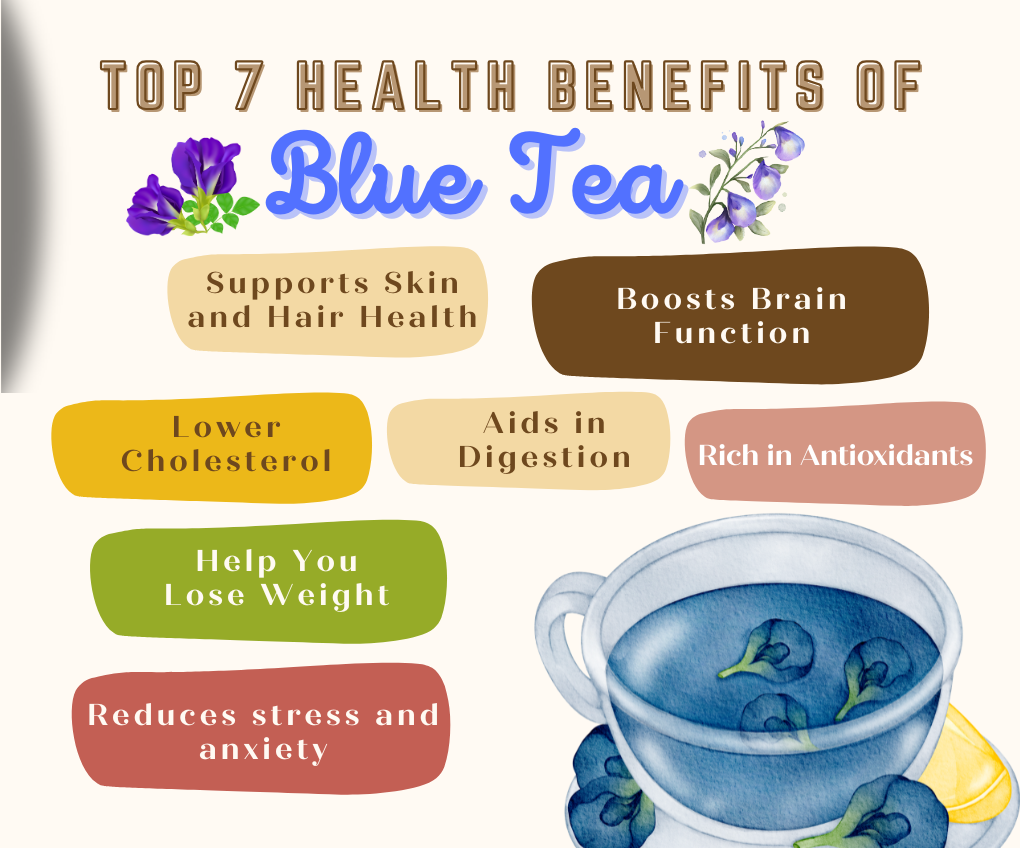
Blue tea is one of the natural antioxidant drinks. As mentioned earlier, the tea is rich in anthocyanins, namely delphinidin, which is the blue colored antioxidant pigment naturally found in edible, deep blue to purple color fruits, vegetables, and flowers, and so responsible for the signature blue color of blue tea. Evidence suggests that delphinidin can protect one against lipid peroxidation and diseases like heart disease, diabetes, and certain cancers.
Blue tea is renowned as an herbal tea for weight loss and so incorporated in many weight loss diet plans. Studies reveal that it can help manage weight by inhibiting the formation of fat cells and lipid deposition. Also, preventing fatty liver, which contributes to belly fat.
Blue tea has antioxidant properties. Therefore, it is very effective in delaying natural skin aging, preventing premature skin aging, and improving overall skin texture and tone. Besides, it is even efficient for promoting voluminous and strong hair growth.
Blue tea has anti-diabetic properties. Hence, diabetics can maintain their normal blood sugar levels by consuming blue tea along with their meals and regular diabetes medicines.
Studies reveal that regular intake of blue tea benefits one's brain health. It can help improve one's thinking ability, focus, memory, and cognitive performance. It boosts acetylcholine in the brain, which can prevent age-related memory loss and other mental health issues.
These are some of the several caffeine-free tea benefits, which are also seen with the intake of blue tea at the end of a hectic day. A cup of lukewarm blue tea before bedtime can be mentally relaxing. By blocking the effect of adenosine, a brain chemical associated with fatigue and triggering the release of adrenaline, the hormone that boosts energy, it can help reduce stress, anxiety, and even treat headaches.
Butterfly pea flower has long been in use as a mild diuretic and digestive aid. As a tea, it can help in body detoxification and support liver health. It won't make one feel bloated as is with regular tea.
Now, as you are aware of blue tea, it's time for you to learn how to make it for yourself and others at home.
Blue tea recipe is straightforward, as follows:
There is no fixed time at which blue tea can be enjoyed by everyone. The best time depends on the purpose for which it is being consumed. If taken for weight loss or boosting metabolism, the best time is before breakfast or in between meals. However, if taken for improving brain functioning, relieving stress. For a calming effect and better sleep, sip it about half an hour before bed. But it can be consumed at any time of the day to enjoy its medicinal benefits.
In general, most consumers report no side effects. However, some anecdotal evidence claims that some potential side effects, especially in those who are over-consuming it, are allergic to plants, taking some drugs that can interact with it, or are pregnant or breastfeeding. In rare cases, blue tea can lead to slight stomach issues like bloating, nausea, or sensitivity-related reactions.
Blue tea is brewed by steeping butterfly pea blossoms in warm water. It has medicinal benefits because it contains high levels of anthocyanins. It can do wonders for the brain, skin, hair, and digestive health. It is rich in antioxidants and so even has anti-diabetic and cancer-fighting properties. With plenty of blue tea benefits known to us, we can conclude that this tea won't make anyone bored with it. So, Next time, tea is on your mind.
For a more holistic approach to wellness, consider combining blue tea with healthy eating habits like the Mediterranean diet, known for its heart and brain benefits.

Blue tea is made from dried butterfly pea flower petals (Clitoria ternatea), characterized by their deep blue color and high content of antioxidants and health-promoting compounds.
Regular use of blue tea is generally fine when taken in reasonable amounts. It's generally safe and can support digestion, immunity, and mental sharpness without any caffeine-related side effects.
Blue tea can aid in weight reduction by boosting metabolism, improving digestion, and acting as a natural diuretic, which helps remove toxins and alleviate bloating.
Yes, blue tea is naturally caffeine-free. This is ideal for individuals who avoid caffeine or seek a soothing, herbal alternative to regular caffeinated beverages.
Blue tea is safe for most people. Drinking too much may cause mild discomfort, like nausea or digestive upset.
Pregnant women should avoid blue tea without consulting a doctor, as its influence on pregnancy is not thoroughly researched, and certain herbal ingredients can affect hormonal balance or uterine contractility.
A squeeze of lemon turns the blue infusion into a stunning violet or magenta shade. The change in pH causes a colour shift from blue to purple or pink, making it visually attractive to behold.
> Allergy Medications: Types, Uses, Costs & Side Effects
> Xeljanz Cost & Savings Guide: How to Buy Safely Online
> 5 Ways to Lower Your Prescription Drug Prices This Month