Enjoy FREE shipping on your first order! (Minimum $99 purchase)
Alert: Important Update for US patients - Upcoming U.S. Government changes. Click to read more
Enjoy FREE shipping on your first order! (Minimum $99 purchase)
Alert: Important Update for US patients - Upcoming U.S. Government changes. Click to read more
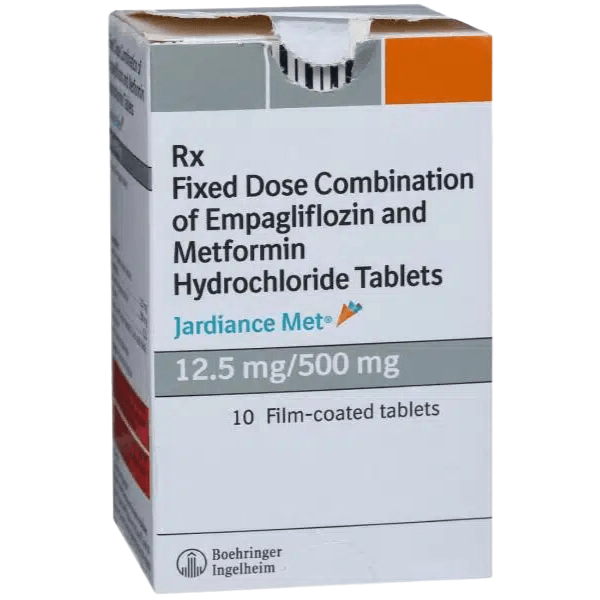
*The product shipped may have different packaging depending on supplier/strength chosen
Synjardy is used to treat Type 2 Diabetes. The Synjardy cost varies depending on its available strength, the dosage prescribed, the manufacturer brand recommended, the quantity needed, and the local dispensing pharmacy you prefer to buy Synjardy from.
Adults who have type 2 diabetes mellitus are prescribed Synjardy. it is often recommended When diet and exercise by themselves are insufficient for glycemic management. It is advised not to be administered by diabetes type 1 or diabetic ketoacidosis patients.
Synjardy offers a dual mode of action to help people with type 2 diabetes regulate their blood sugar levels by combining the medications empagliflozin and metformin. Empagliflozin functions by preventing the kidneys from reabsorbing glucose, causing more glucose to be expelled in the urine. Metformin enhances insulin sensitivity and lowers hepatic glucose production which aids in lowering blood sugar levels.
Synjardy's dual mechanism of action lowers blood sugar levels by lowering glucose reabsorption in the kidneys and lowering glucose synthesis in the liver. Additionally, it might result in weight reduction as a result of other metabolic effects including the excretion of extra glucose calories through the urine. Let us understand more about Synjardy cost and where to buy Synjardy online.
"Antidiabetic Combination" is Synjardy's therapeutic category. It is a combination medicine from the group of medications used to treat type 2 diabetes mellitus. Empagliflozin and Metformin, Synjardy's two active ingredients, cooperate to help persons with type 2 diabetes control their blood sugar levels.
Metformin is a biguanide drug, and Empagliflozin inhibits sodium-glucose cotransporter 2 (SGLT2). Together, they offer a dual mode of action to enhance glycemic management, which may also, result in weight loss in some people.
The active components metformin and empagliflozin are combined in Synjardy in a variety of strengths based on the product of the country and the manufacturer's precise formulation.
The most prevalent available strength of Synjardy are:
Adults with type 2 diabetes mellitus can be treated with Synjardy.
The disorders and medicinal applications for which Synjardy is recommended:
The recommended dosage of Synjardy (Empagliflozin/Metformin) may change depending on the patient's age, weight, renal function, and degree of diabetes. The usual Synjardy starting dose is typically one pill of Synjardy 5 mg/500 mg every day.
However, to get the best blood sugar management while lowering the risk of side effects, your doctor may change the dosage as necessary. Your response to the medicine and the regular monitoring of your blood sugar levels may require dosage modifications.
The therapeutic benefits of the empagliflozin/metformin combination drug Synjardy are intended to be exerted through gastrointestinal absorption in order to improve glycemic control and manage blood sugar levels in persons with type 2 diabetes.
Synjardy is frequently consumed orally, which means it is swallowed whole. It comes in tablet form, and the advised dosage is often ingested with water, with or without meals. The tablets should not be chewed or crushed; they should be administered as a whole.
Some common Synjardy's typical side effects include:
Several significant medication interactions associated with Synjardy include:
Synjardy (Empagliflozin/Metformin) has a number of contraindications, including:
There are a few important precautions and food-related considerations to take into account when taking Synjardy:
The recommended Synjardy storage conditions include:
Synjardy price varies on its manufacturer, dosage, demand-supply chain, the product of the country, and other factors. Depending on the drugstore you go to Synjardy cost for a supply of 60 oral tablets in a dosage of 12mg is around $650-$800 based on the product of the country.
Since there is no approved generic equivalent medication yet available in the market the Synjardy price is still under patent protection policy and is regulated by its manufacturer. It is one of the prominent factors for high Synjardy costs.
Synjardy is easily available in the market yet many people hunt to buy Synjardy online to save time, money, and energy and make it affordable since it is a long-term maintenance medication.
One can buy Synjardy from CanadaPharmacyPro at a reduced cost compared to the local, regional pharmacy. It is a trustworthy online pharmacy that ensures you don't have to visit a store to buy prescription drugs to use its services. The best and most reliable supplier to deliver your drugs at your door is one that offers excellent customer service, free shipping, and customer-friendly support. It is a conveniently located, legally operating, and recognized online pharmacy that provides name-brand and generic drugs at competitive prices.
The length of time it takes for Synjardy to begin functioning varies from person to person and is influenced by a number of variables, including the patient's response, the seriousness of the ailment being treated, and general health. A few days after taking the medication, some patients may see a drop in blood sugar levels, but it usually takes a few weeks for the drug to have full effect.
Empagliflozin and metformin, which make up Synjardy, have various elimination half-lives that affect how long they remain in the body. Empagliflozin has an elimination half-life of roughly 16.6 hours. This indicates that it takes between 2.75 and 3.5 days for empagliflozin to leave your system. The average time it takes for metformin to leave the body is one to two days.
Yes, constipation is one of the gastrointestinal adverse effects of Synjardy (Empagliflozin/Metformin). It's crucial to let your doctor know right away if you have constipation or any other alarming side effects while taking Synjardy.
Yes Synjardy, which contains the active ingredients empagliflozin and metformin, may cause weight loss. Since it causes the excretion of glucose in the urine to increase. As a result, it can aid in lowering blood sugar levels and cause weight loss since extra glucose calories are lost.
There is minimal study suggesting the association of hair loss with Synjardy. There are no studies or reports to support claims that Synjardy, a medicine mix including metformin and empagliflozin, causes hair loss as an adverse effect.

DISCLAIMER: The information contained in this page is supplied to canadapharmacypro.com by third party medical content expert, and is not intended to substitute medical advice from a licensed doctor. Always make sure to consult with a doctor before ordering medication online. Do not avoid or delay seeing a healthcare provider based on what you read here.
Please note that not all products, including any referenced in this page, are shipped by our affiliated Canadian Pharmacy. We affiliate with other dispensing pharmacies, that ship product directly to our customers from the following jurisdictions: Australia, New Zealand, Mauritius, India, Canada and United Kingdom. The items in your order may be split and shipped from any other pharmacy that is listed if it is not available from the chosen pharmacy. In this event, you will be contacted and approval obtained before it is shipped. Rest assured, we only affiliate with our authorized dispensaries that procure product through reliable sources.

We will call your doctor for your prescription free of charge.
Submit your doctor details